Braindom: Brain Games Test
- 4.6
- Rating
- 100.00M
- Installs
- Free
- Price

 Analysis by App-foxy
I first approached Braindom: Brain Games Test expecting a quick collection of ordinary riddles, the sort of puzzle game I might open for a few minutes and forget. Instead, I found a bright, character-led brain teaser built around short challenges that ask me to look carefully, question the obvious answer, and sometimes stop treating the picture as a normal picture. That first impression matters because the game is easy to start: there is no complicated setup, and its free entry makes it simple to try during a break.
Created by Lahana Game Studio, this puzzle game has become a very familiar name in mobile brain games, with a 4.7 average from around 2.2 million ratings and more than 100 million installs. Those figures do not automatically make every puzzle brilliant, but they do explain why the format feels so polished and immediately readable. The intended audience is broad, too: it is free to install, rated Everyone, and runs on devices using Android 8.1 or later.
How Braindom Turns Simple Scenes Into Playable Questions
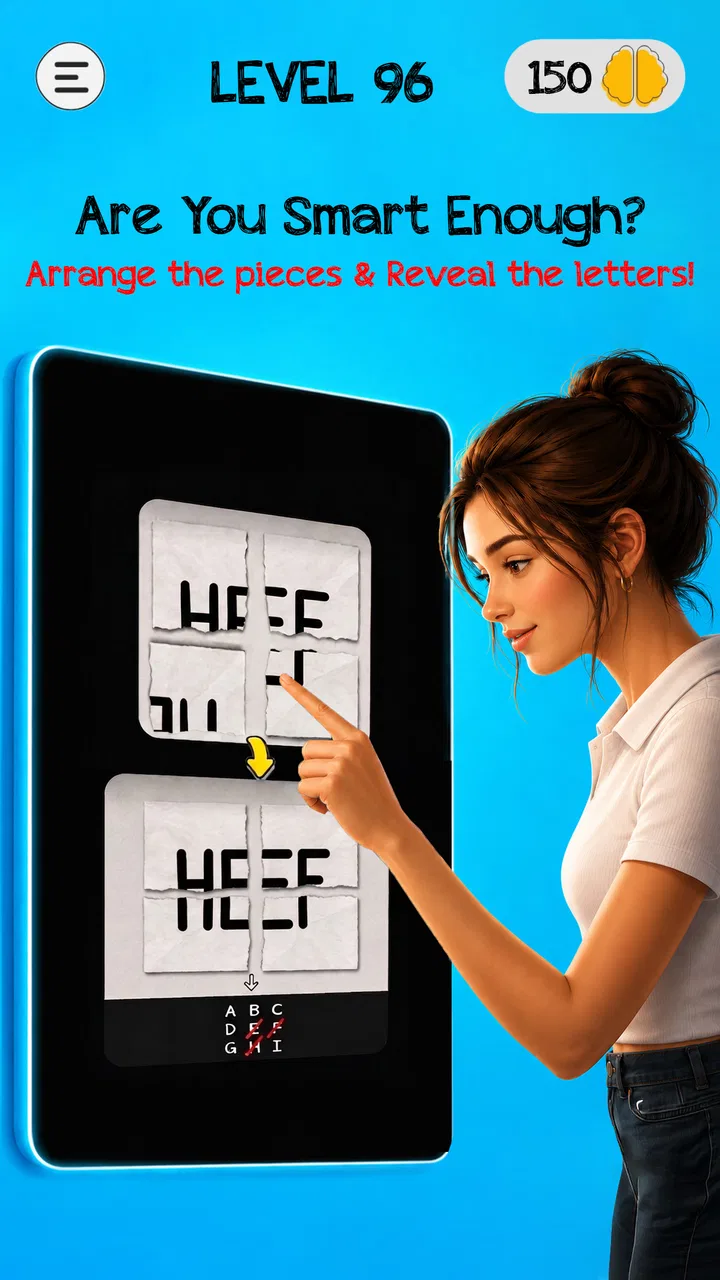
I find the game’s clearest strength in how it turns an ordinary-looking scene into a question about attention: the answer may depend on a small visual clue, a detail in the wording, or the relationship between the two. That makes each puzzle a useful little exercise in resisting the first obvious interpretation. The same design choice also sets up its main trade-off: clever misdirection can be satisfying, but it can feel arbitrary when a clue does not point clearly toward the intended solution.
You May Also Like

 Pandora - Music & Podcasts
Pandora’s Music Is Easy to Start, but Harder to Recover
Pandora’s strength is its low-effort path from a seed to a station. Its weak spot is how much confidence it asks you to place in connection, setup, and quiet recovery.

 AccuWeather: Weather Radar
AccuWeather Review: A Quick, Clear Forecast for Everyday Decisions
For everyday plans, the best forecast is the one you can understand quickly. AccuWeather makes rain timing, radar, and local conditions easy to act on, with a few trade-offs.

 Hill Climb Racing
Why Hill Climb Racing Still Turns Crashes Into One More Run
A tiny car, a bumpy hill and one more upgrade: Hill Climb Racing keeps resurfacing because its simple chaos makes every near-miss feel personal.

 AliExpress - Shopping App
AliExpress Makes Global Shopping Feel Personal, but Shoppers Bear the Risk
AliExpress turns a global marketplace into a pocket-sized discovery engine. Its reach is useful, its shopping loop compelling, and its trade-offs easy to miss.

 Lords Mobile: Kingdom Wars
Lords Mobile Is a Kingdom-Building Routine, Not a Quick Match
A case-by-case verdict on the building, battles, device demands, and social commitments that make Lords Mobile rewarding for some players and exhausting for others.

 PDF Scanner app - TapScanner
TapScanner Makes Paperwork Easier to Capture, Check, and Share
TapScanner makes scanning with a phone feel less like a rescue operation and more like a dependable step in getting work done. Its capture tools are useful, though not flawless.
More From Our News Desk
View All News


A first impression built around curiosity
The strongest early quality is the way each challenge presents itself as a small visual problem rather than a traditional quiz page. I am usually shown a scene, a question, and a handful of details that may or may not matter. The wording encourages me to search for an unusual interpretation instead of automatically choosing the most sensible-looking answer.
That approach makes the game approachable for people who do not normally play puzzle games. You do not need to learn a control scheme, memorize a map, or understand a complicated progression system. The main skill is attention. I can begin with a touch and spend as little or as much time as I want on the question in front of me.
The presentation also gives the game a more social feel than a solitary logic test. A puzzle can be shown to a friend, and the discussion often becomes part of the entertainment: one person notices an object, another interprets the wording, and somebody eventually tries the answer that seems too strange to work. That makes it useful for casual group play, especially when the goal is conversation rather than competition.
My main reservation appears just as quickly. These are often lateral-thinking puzzles, not carefully structured logic problems. If you prefer clues that lead to one conclusion through a transparent chain of reasoning, some challenges may feel arbitrary. The game is asking, “What detail did you overlook?” more often than, “Can you calculate the correct result?”
A visual language that teaches you how to look
The art direction is functional but important. Scenes use expressive characters, clear objects, and exaggerated situations so that the relevant clue can be found without turning the screen into visual noise. The illustrations create a playful world where a small gesture, item, or inconsistency can carry the entire answer.
I like that the artwork supports the central habit of the game: inspect before acting. A quick tap on the most obvious object is rarely the best method. I have had better results by scanning the whole scene, reading the question again, and checking whether the image is quietly contradicting what the text suggests. That routine is one of the most useful skills the game teaches.
The setting is not designed as a deep story world with extensive lore. Instead, it is a sequence of compact situations. Characters and props give each puzzle a little context, but the scene exists mainly to frame the question. This keeps the game moving, although players looking for a continuous narrative may find the world thin.
There is also a deliberate cartoon quality to the visual humor. It softens failure and makes unusual solutions feel less frustrating than they might in a serious detective game. When I answer incorrectly, the moment generally feels like a prompt to rethink the scene rather than a punishment for making a mistake. That tone is a good fit for the Everyone rating, because the challenge comes from interpretation rather than mature subject matter.
Why the screen design works for short sessions
The compact puzzle format suits the way people actually use phone games. I can play while waiting for an appointment, take on a few questions during a commute, or return later without needing to remember a complex objective. Each scene has a clear visual focus, so the game does not demand a long uninterrupted session.
That convenience has a trade-off. Short challenges can create a pleasant rhythm, but they also mean the experience depends heavily on the quality of individual riddles. A clever puzzle gives me a satisfying click of recognition; a weak one can feel like I am guessing the designer’s intended trick. The game is at its best when the picture contains a clue that becomes obvious only after I change my perspective, not when the solution depends on an obscure interpretation.
Sound, feedback, and the rhythm of play
The mood is shaped more by visual energy and quick feedback than by a large audio identity. The game’s presentation keeps attention on the scene and the answer, which is sensible for a puzzle that asks me to examine small details. I never feel that the sound is supposed to carry the experience; the images and wording do that work.
This restrained approach helps when I play in public or in a quiet room. The game remains understandable even when I keep the volume low, and the short interactions do not require me to follow a musical sequence. For me, that makes it more practical than puzzle games whose atmosphere depends on constant audio cues.
The pacing follows a simple cycle: read, inspect, test an idea, and move on. When I solve a question quickly, the momentum is satisfying because there is little downtime between challenges. When I get stuck, the same structure can become repetitive. I may spend longer staring at a scene not because the reasoning is deep, but because I am trying to predict the trick the game wants.
That is why I recommend playing in small bursts rather than treating it like a long evening game. A few puzzles can refresh my attention. A very long session can make the visual formula feel familiar, and once I start tapping randomly, the game stops being a test of observation and becomes a test of patience.
The mechanics fit the visual mood
The core interaction is deliberately simple, which allows the art and wording to remain the focus. I do not need advanced reflexes or a detailed understanding of physics. The challenge lies in recognizing that a scene may be hiding a clue in plain sight, or that the question may be inviting an answer outside its most literal reading.
One practical technique has helped me more than any general “think outside the box” advice: I separate the question from the illustration before tapping. First I identify exactly what is being asked. Then I inspect every character, object, position, and unusual detail. Finally, I consider whether the expected action is a normal tap or something more experimental, such as interacting with an element that does not look like the obvious answer.
This method is especially useful when the scene appears too easy. In a conventional puzzle, a simple image may genuinely have a simple solution. Here, an overly obvious setup often signals that the important clue is elsewhere. I also avoid rapid repeated tapping because it can make me overlook the relationship between the wording and the picture.
The game works well as a casual attention exercise, but I would not describe it as a formal training tool. Its puzzles are designed for amusement and surprise, so the thinking style is flexible and sometimes intentionally mischievous. Someone seeking mathematical progression, vocabulary study, or a carefully graded logic curriculum would probably be better served by a specialized alternative.
Hints and the cost of getting unstuck
Like many mobile puzzle games, it is built around the possibility that a player will need help. That is useful because a lateral riddle can be difficult to solve even when the clue is visible. However, I think hints should be treated as a last resort rather than the normal way to progress. Looking at one too early removes the small moment of discovery that gives the game its personality.
There is an economic point worth considering before installing. The game is free, while in-app purchases range from $1.49 to $6.99 per item. That makes the initial trial low-risk, but players who rely heavily on assistance may eventually feel pressure to spend. My advice is to try a puzzle several ways first: reread the wording, inspect the corners of the scene, and test whether the question is using a double meaning. Those steps preserve more of the challenge and reduce unnecessary hint use.
This is also where the game differs from a paid, self-contained puzzle collection. A premium alternative may offer fewer interruptions and more carefully authored logic, while Braindom offers easy access and a large supply of short, playful situations. I prefer the latter when I want a casual distraction, but I would choose the former for a focused puzzle night.
What the version and device requirements mean in practice
The current version is 2.6.8, and the minimum Android requirement is 8.1. For most reasonably modern Android phones, that should make the game an uncomplicated option, but anyone using an older device should check compatibility before planning around it. The game’s visual simplicity also means I do not need a high-end gaming phone to understand its appeal.
Because the game is built from individual visual challenges, it is particularly suitable for people who want a low-commitment installation. I can try it without deciding that I am beginning a huge campaign. It is also a reasonable choice for families looking for something everyone can understand, although younger players may still need help with wordplay and with resisting random tapping.
Where it stands beside other puzzle choices
Compared with classic crossword or sudoku apps, this game is more visual and less methodical. I do not build a solution through a fixed grid or a set of formal rules. Compared with hidden-object games, it places more weight on the relationship between the question and the scene, rather than simply locating every item. Compared with physics-based brain games, it demands less experimentation with movement and more willingness to reinterpret the situation.
That comparison explains who should choose it. If I want a fast, colorful puzzle that can be understood in seconds, this is a strong fit. If I want a structured difficulty curve, deep deduction, or a calm system that rewards exact planning, another category will suit me better. The game’s appeal is its variety of small surprises, not its complexity.
I also find it more enjoyable with another person than with a purely competitive score-based game. Two players can debate the wording and search the scene together, and the compact format makes it easy to pass the phone back and forth. On the other hand, solo players who dislike being tricked by ambiguous phrasing may become impatient, especially if they expect every answer to be fully deducible from conventional logic.
Everyday uses beyond filling spare minutes
A realistic use case is a short waiting period when I want something more engaging than scrolling. I can open a puzzle, study the scene, and stop after solving it without losing track of a long storyline. The game also works during a family gathering when people want a shared activity that does not require everyone to know the same rules.
For parents, the visual format can encourage children to describe what they see and explain why an answer might work. I would still play alongside younger children rather than treating it as an unattended educational product. The game rewards flexible interpretation, but it does not replace age-appropriate learning materials or a structured reasoning lesson.
For adults, the most useful habit is to use it as a reset between demanding tasks. I sometimes find that a short puzzle breaks a mental loop, especially when the answer requires looking at a familiar situation differently. The benefit is modest and entertainment-focused, but the act of slowing down to inspect details can be a pleasant change from passive phone use.
Who should skip it
I would skip this game if my priority were a serious logic challenge with no wordplay, no visual trickery, and a predictable standard for correctness. I would also hesitate if I disliked cartoon presentation or wanted a strong story that developed from one chapter to the next. The scenes create a mood, but they are not a substitute for a narrative adventure.
Players who become frustrated by trial and error should approach it carefully. Some puzzles reward observation beautifully, while others may feel dependent on guessing the designer’s intention. That unevenness is part of the format, and no amount of attractive artwork can remove it completely.
My atmosphere verdict
What stays with me is the coherence between the art, the light mood, and the quick puzzle rhythm. The colorful scenes make the riddles approachable, the character situations give each question a little personality, and the simple interaction keeps the focus on noticing rather than mastering controls. It is not an atmospheric game in the cinematic sense, but it does create a consistent playful space for short bursts of attention.
Lahana Game Studio has chosen accessibility over depth, and I think that is the right decision for this particular concept. The game is easy to recommend to a friend who wants casual brain teasers, especially because it is free and suitable for Everyone. Its large audience makes sense: the basic idea is immediately clear, yet the best puzzles still manage to make me reconsider what I thought I had seen.
My final advice is to play slowly, read every question twice, and inspect the entire scene before spending a hint. With that mindset, Braindom: Brain Games Test delivers a cheerful, convenient puzzle experience that works especially well in short sessions and shared play. Its limitations are real—the logic can be playful rather than rigorous, the format may become repetitive, and assistance can affect the free-to-play feel—but for a colorful collection of quick visual riddles, the strongest reason to try it is the small satisfaction of discovering that the answer was visible all along.
FAQs for Braindom: Brain Games Test
01What is Braindom: Brain Games Test and what makes it unique?
Braindom: Brain Games Test is a puzzle app designed to challenge your brain with various riddles, logic puzzles, and tricky questions. It stands out due to its creative and often humorous approach to problem-solving, encouraging players to think outside the box. The game combines visual puzzles with word challenges, making it a diverse and engaging mental workout.
02Is Braindom: Brain Games Test suitable for all ages?
Yes, Braindom: Brain Games Test caters to a wide audience, including both children and adults. The puzzles are designed to be fun and challenging, but not overly complex, making it accessible for younger players while still providing a stimulating experience for adults looking to sharpen their cognitive skills.
03Does Braindom: Brain Games Test require an internet connection to play?
Braindom: Brain Games Test can be enjoyed offline, allowing players to access most of the puzzles without an internet connection. However, some features, such as leaderboards or daily challenges, may require online access to function properly. This makes it a versatile option for on-the-go gaming.
04Are there in-app purchases in Braindom: Brain Games Test?
Yes, Braindom: Brain Games Test includes in-app purchases. Players can buy hints or additional puzzle packs to enhance their gameplay experience. While the game is free to download, these optional purchases can help players who may find certain puzzles particularly challenging and are looking for a little extra help.
05How often is Braindom: Brain Games Test updated with new content?
The developers of Braindom: Brain Games Test regularly update the app with new puzzles, ensuring that players always have fresh content to explore. These updates often include new levels, improved features, and bug fixes, maintaining the game's engaging experience and ensuring it remains a favorite among puzzle enthusiasts.
Pros
- Engaging puzzles enhance critical thinking.
- Varied levels keep gameplay fresh and exciting.
- Colorful graphics make it visually appealing.
- Short play sessions fit into busy schedules.
- Offline mode available for uninterrupted fun.
Cons
- Some puzzles can feel repetitive over time.
- Occasional ads disrupt the gaming experience.
- Hints can be costly without in-app purchases.
- May require frequent updates for new content.
- Not all puzzles provide clear instructions.

Braindom: Brain Games Test
Gallery